
Profile · Understand the landscape
PWe begin by deeply understanding your business: strategic objectives, operational realities, competitive position, and organisational readiness. This phase establishes the foundation for everything that follows.
AI Opportunity Discovery Methodology
Clarity before commitment.
PRISM is ntelio's five-phase methodology for identifying, validating, and prioritising the AI opportunities inside your business. We turn “we should do something with AI” into a scoped, measurable, build-ready roadmap — before a single line of code is written.
Organisations know AI can transform their business — but struggle to identify where it will deliver real value. Too often, AI initiatives start with technology and search for problems, leading to pilots that never scale and investments that never pay off.
PRISM is a structured methodology that systematically identifies, validates, and prioritises AI opportunities aligned with your strategic objectives. Rather than chasing trends, we help you discover where AI will create measurable business value — and build the roadmap to get there.
You need clarity before commitment.
Each phase has a defined outcome. You exit one phase with the artefact required to enter the next — and you can stop at any phase boundary if the answer is no.
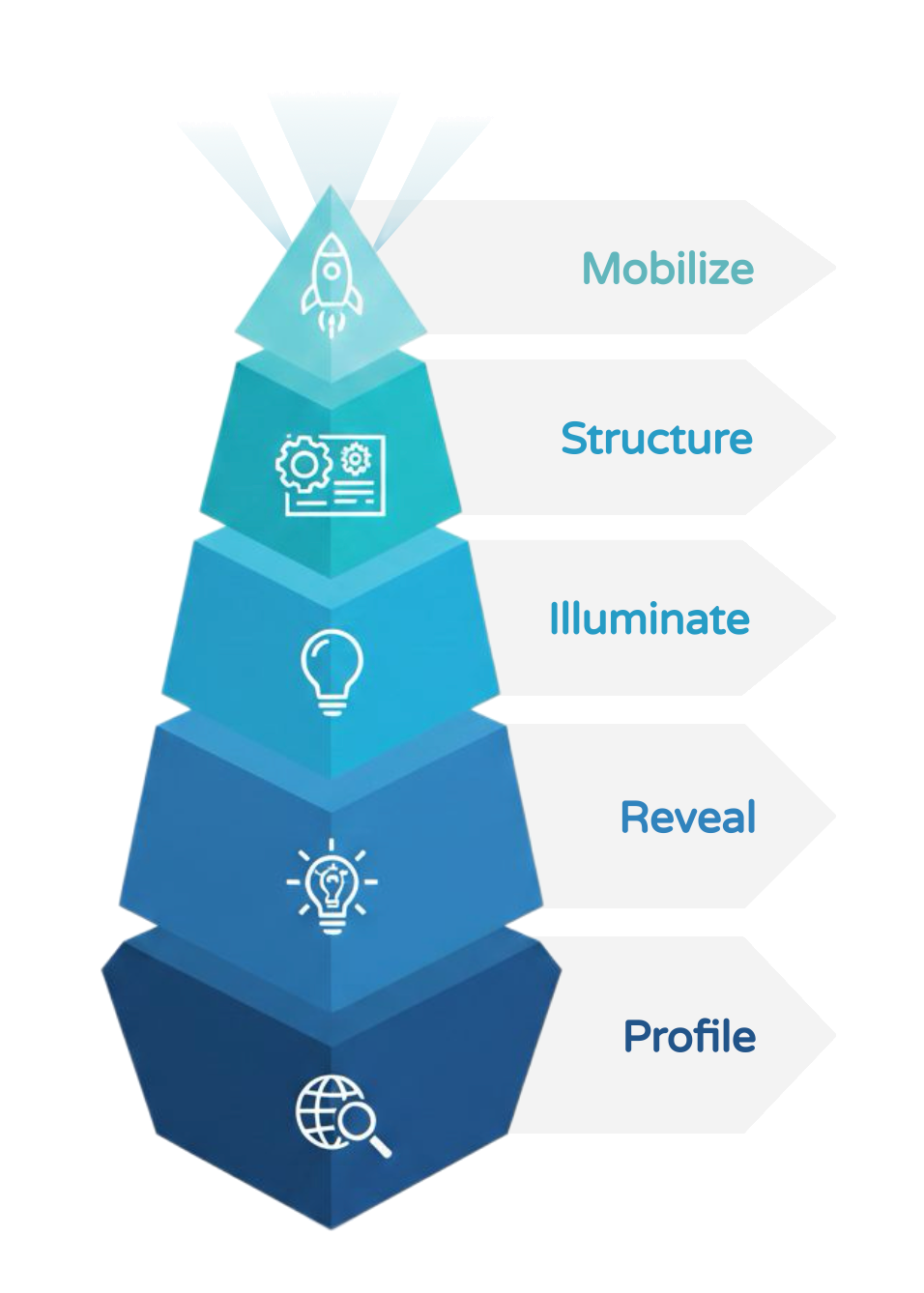
Bottom-up. Profile is the foundation. Each phase builds on the last.
We begin by deeply understanding your business: strategic objectives, operational realities, competitive position, and organisational readiness. This phase establishes the foundation for everything that follows.
With context established, we systematically scan your organisation for AI opportunities. We identify pain points, inefficiencies, and unmet needs — then map them to AI capabilities that can address them.
Not every opportunity is worth pursuing. We evaluate each against strategic fit, feasibility, risk, and potential value — then work with your stakeholders to align on priorities and define clear requirements.
Strategy becomes action. We develop a detailed implementation roadmap that sequences initiatives based on value, dependencies, and organisational capacity. Architecture guidelines and specifications ensure teams can execute with confidence.
Before implementation begins, we validate technical feasibility, confirm data readiness, and finalise partner and platform decisions. You move forward with confidence, not assumptions.
Most AI engagements skip the discovery phase and jump straight to a pilot. PRISM is built around the conviction that the discovery phase is where most of the value — and most of the risk — actually lives.
At the conclusion of a PRISM engagement, you walk away with the documentation an implementation team needs to start building — and the business case to justify it.
AI direction aligned with business objectives.
Validated AI use cases mapped to business value.
Clear ranking based on value, feasibility, and risk.
Sequenced plan with dependencies and milestones.
Architecture, data requirements, and specifications.
ROI projections and success metrics.
From a focused four-week sprint to an embedded strategic partnership.
Focused assessment for organisations with a defined problem area. Delivers prioritised opportunities and a high-level roadmap.
Comprehensive discovery across the enterprise. Delivers the full documentation package, ready for implementation teams.
Continuous strategic partnership with dedicated resources supporting your AI transformation journey.
We’ll send a short questionnaire, schedule a 30-minute call, and tell you whether PRISM fits — or doesn’t — for your situation. No deck required.
sales@ntelio.ai →